
Summer, no matter how hot, cannot slow down life in India. The season's rhythms must go on. There is great beauty to an Indian summer and these 10 pics tell that story...

The persistent heat has also put pressure on daily life, affecting outdoor work, travel, and electricity consumption in many parts of the country.

As temperatures soar, booking queries have surged by double digits -- going up to 125 per cent -- for destinations like Kashmir, Shillong, Gangtok, Munnar, Leh, Rishikesh, Guwahati, Imphal, Kodaikanal and the Andamans.

The scorching summer heat is frying these Indian towns and cities.

A new study indicates that India's monsoon season could experience a significant increase in uncompensable heat stress under a 2 degrees Celsius global warming scenario, extending the duration of extreme heat conditions.

Several parts of India are experiencing a severe heatwave, with temperatures soaring past 44 degrees Celsius. States are issuing alerts and taking measures to protect people and animals from the extreme conditions.

India's peak power demand reached an all-time high of 257.37 GW on Monday, driven by increased use of cooling appliances during an intense heatwave, according to power ministry data. The Indian Meteorological Department has forecast continued heatwave conditions in northwest and central India.

Health experts warn that rising temperatures could create a growing burden of silent and cumulative health stress across the population.

As Mumbai grapples with rising temperatures and humidity, many slum dwellers are spending their nights on Versova beach to escape the unbearable heat in their poorly ventilated homes, with the India Meteorological Department (IMD) forecasting a gradual rise in temperatures before a decline, and a yellow alert for isolated rainfall.

Aligarh resident Habib Saifi has built a small hut-like structure on his bike to protect himself from direct sunlight during this intense summer.

'Can you believe there are over 26,500 deaths linked to heatwave-driven ozone in 2024?'

The India Meteorological Department (IMD) has forecasted an early onset of the southwest monsoon over Kerala, expected around May 26. This marks the beginning of the crucial rainy season for India.

Large parts of India are experiencing a severe heatwave, with temperatures soaring to dangerous levels. Authorities have issued alerts and health advisories as the heatwave intensifies across multiple states.

'We should expect extreme heat, extreme rains, floods, landslides and maybe cyclones. Not just this year, in the coming year as well.'

Northern states in India are experiencing severe heatwave conditions, with temperatures reaching up to 46.6 degrees Celsius. The heatwave has impacted daily life, leading to a decline in tourism and increased power demand. Authorities have issued advisories and implemented measures to mitigate the effects of the extreme heat.

India's race walk coach Ronald Weigel has urged national selectors to consider the extremely humid conditions during the National Inter-State Championships when picking the team for the upcoming Asian Games. He highlighted how tough weather significantly slows down endurance athletes and suggested holding future selection events in more favourable conditions like Bengaluru.

Many places across northern states including Delhi recorded above-normal temperatures crossing 40 degrees Celsius, while the India Meteorological Department warned of heatwave conditions in parts of Uttar Pradesh in the coming days. Jammu and Kashmir saw a dip in temperatures with fresh snowfall in the higher reaches and rainfall in the plains.

Veterinarians and animal rescuers in Delhi report a surge in cases of heat-related illnesses among birds and stray animals as the city grapples with a severe heatwave. Dehydration, heatstroke, and gastrointestinal infections are rampant, prompting calls for residents to provide water and shade for animals.

It's been a very tough 2026 summer with many places all over the India map baking in daytime temperatures as high as 46C. Keep yourself well-protected.

Discover the only way to travel, where fun meets fitness!

The IMD has issued an orange alert for heatwave conditions in parts of Kerala, prompting authorities to urge caution. Maximum temperatures are expected to reach up to 41 degrees Celsius in some districts. Strict guidelines have been issued, including the suspension of vacation classes and rescheduling of working hours.

Researchers at IIT Bombay have discovered that heatwaves in the Indo-Gangetic Plains are primarily caused by local land and weather conditions, rather than hot air originating from elsewhere, emphasising the need for location-specific early warning systems.

Unseasonal rainfall could damage standing wheat crops, especially late-sown fields nearing maturity and grain-filling stages.

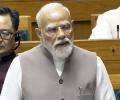
Modi said that the West Asia crisis has been going on now for more than three weeks and is having a very adverse impact on the global economy and on people's lives. He said the entire world is urging all parties for the earliest resolution of this crisis.

As temperatures rise, travellers are increasingly gravitating towards cooler climates, driving demand for hill stations such as Mussoorie, Munnar, Varkala, Ooty and Kodaikanal.
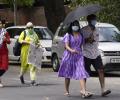
India is expected to experience hotter-than-usual temperatures from April to June, with more heatwave days in central and eastern India and the northwestern plains, the IMD said. Most parts of the country will see higher-than-normal maximum temperatures, except for some areas in western and eastern India where the temperatures are expected to be normal. Minimum temperatures will also be above normal in most regions. The IMD has warned that landslides could occur in parts of Kerala and Karnataka in the Western Ghats and that northeastern states might face flooding in April.

The move is aimed at improving cooling efficiency, potentially reducing sudden power demand spikes, and cutting electricity bills.

India will host the World Championships for the first time since 2009, with the event seen as a key test of the country's ability to deliver large-scale international tournaments as it eyes the 2036 Olympics.

He was enacting and telling stories of none other than Lord Hanuman, the figure, to date, that rules the hearts of the people of Kishkinda or present-day Hampi in the Vijayanagar district of Karnataka.

At the review meeting, chaired by cabinet secretary Rajiv Gauba in New Delhi, the IMD said above normal maximum temperatures are likely over most parts of northeast, east and central India and some parts of northwest India.

During this summer, Indian travel buffs are opting for destinations that provide an escape from the ominous heat, along with coastal regions within the country and countries offering visa-free travel.

On November 18, 1962, 114 soldiers of the 13th Kumaon fought till the last man, and last bullet, in sub-zero temperatures, to beat back the huge Chinese army. We salute the Heroes of Rezang La.
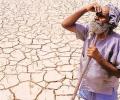
The death toll included over 450 from intense heat wave last summer, according to the World Meteorological Organization.
The India meteorological department said heatwave conditions will persist for at least two more days.
More than twice as much global glacier mass will remain if countries restrict temperature rise to 1.5 degrees Celsius, compared to the warming level of 2.7 degrees Celsius resulting from the current policies, says a new study released.
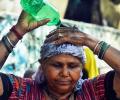
With the summer approaching sooner than scheduled, Maharashtra, Telangana, Odisha, and West Bengal have already started experiencing heat waves with temperatures soaring above 40°C.
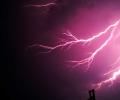
Lightning claims more lives in India annually than any other extreme weather event. Between April and July this year alone, 1,621 people died due to lightning strikes.

The analysis revealed abrupt changes in temperatures occurring in late winter across north India.

The best summer foods of India
